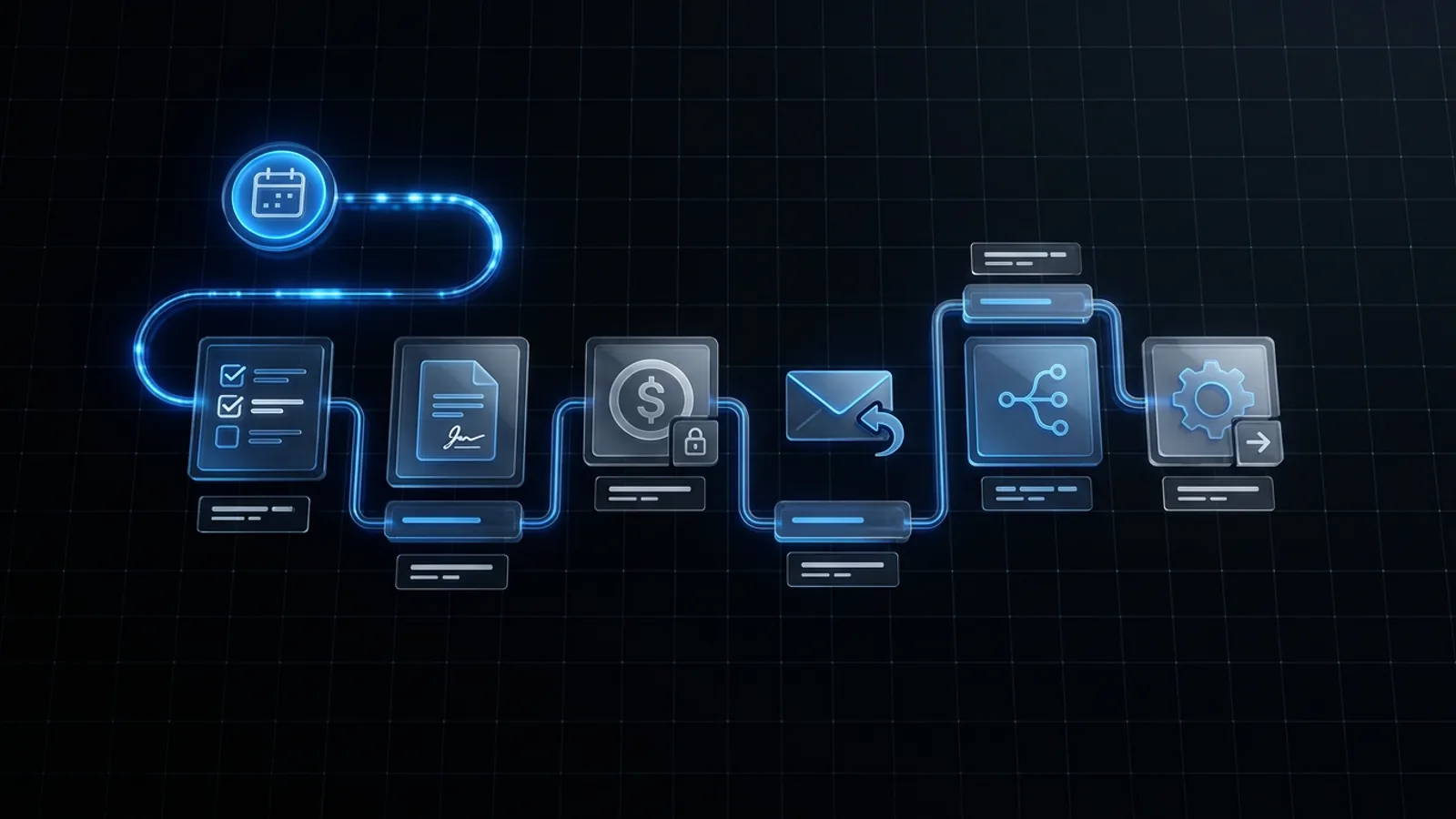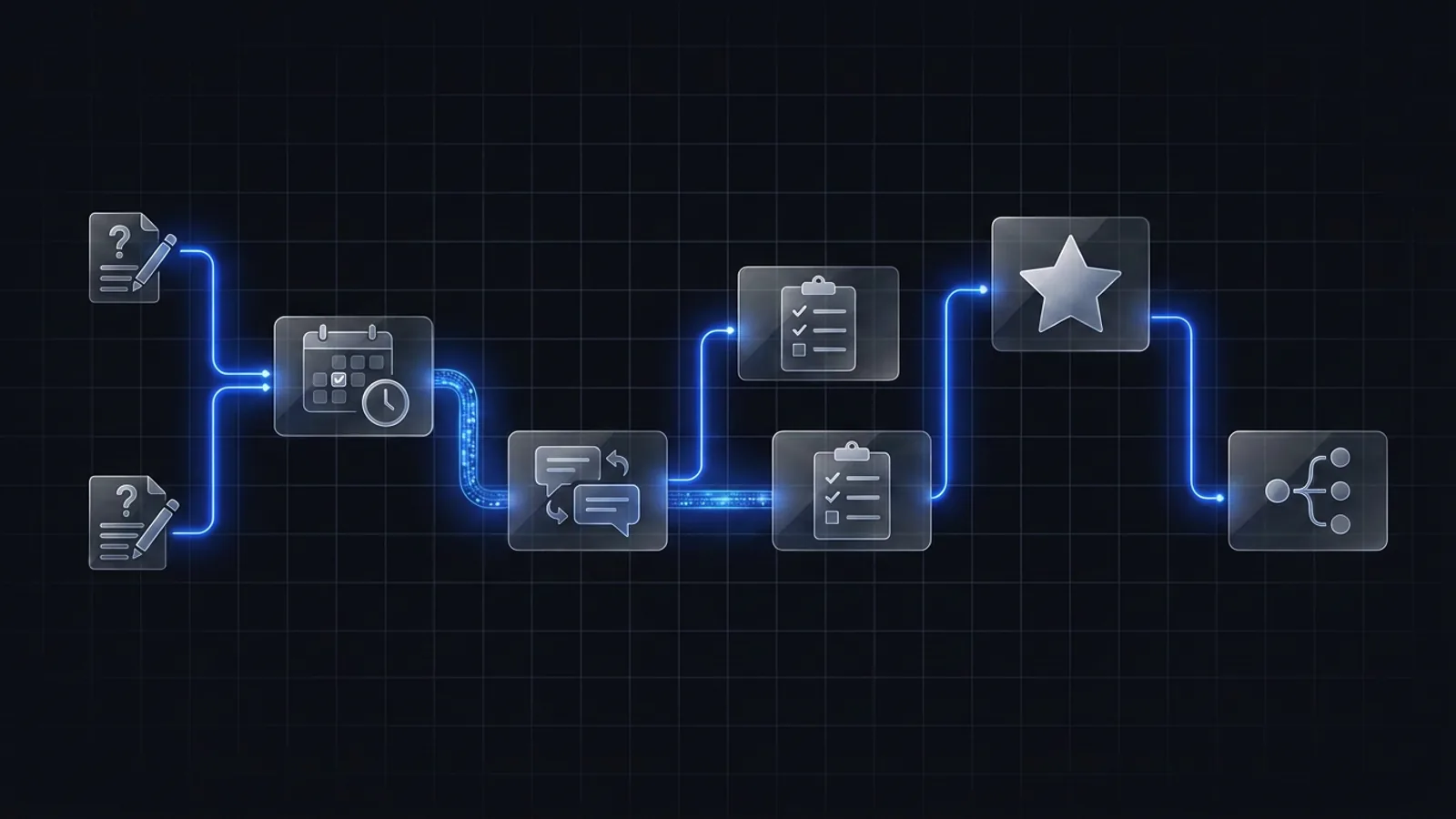
A functional medicine patient journey should connect six operational stages: inquiry, consultation, follow-up, onboarding, review, and referral. At every stage, the clinic should know the next action, who owns it, what the patient receives, and which system records the status.
Many clinics have each individual tool they need, but the path between those tools is unclear. A website form collects an inquiry. A calendar books the consultation. A team member sends reminders. An EHR handles care. A separate process requests reviews. The patient experiences one clinic, but the team often manages several disconnected systems.
A patient journey map turns that collection of tools into an operating system. It does not replace clinical judgment or the EHR. It defines how people move around the care experience and how the team keeps that movement visible.
The six stages of a connected patient journey
- InquiryCapture the source, contact details, area of interest, and consent needed for appropriate follow-up. Assign an owner immediately.
- ConsultationGive the prospective patient a clear booking path, confirmation, preparation details, and reminders.
- Follow-upDefine what happens when someone does not book, does not respond, or needs more time after the consultation.
- OnboardingCoordinate intake, agreements, payment steps, welcome communication, and the first clinical handoff.
- ReviewAsk for feedback at an appropriate milestone with a respectful, easy response path.
- ReferralMake the referral process clear for satisfied patients without turning it into a generic broadcast.
What to define at every stage
A useful journey map is more specific than a diagram. For each stage, document five operating decisions:
- Trigger: What event moves the person into this stage?
- Owner: Which role is responsible for the next action?
- Message: What does the patient receive, and through which channel?
- Status: How does the team know where the person is now?
- Exit: What completed action moves the person forward?
This framework exposes dead ends quickly. If a clinic cannot name the owner or exit condition for a stage, follow-up usually depends on someone remembering what to do.
Automation is not the starting point. First make the journey explicit, then automate the repeatable parts and preserve human review where judgment is needed.
How the CRM and EHR fit together
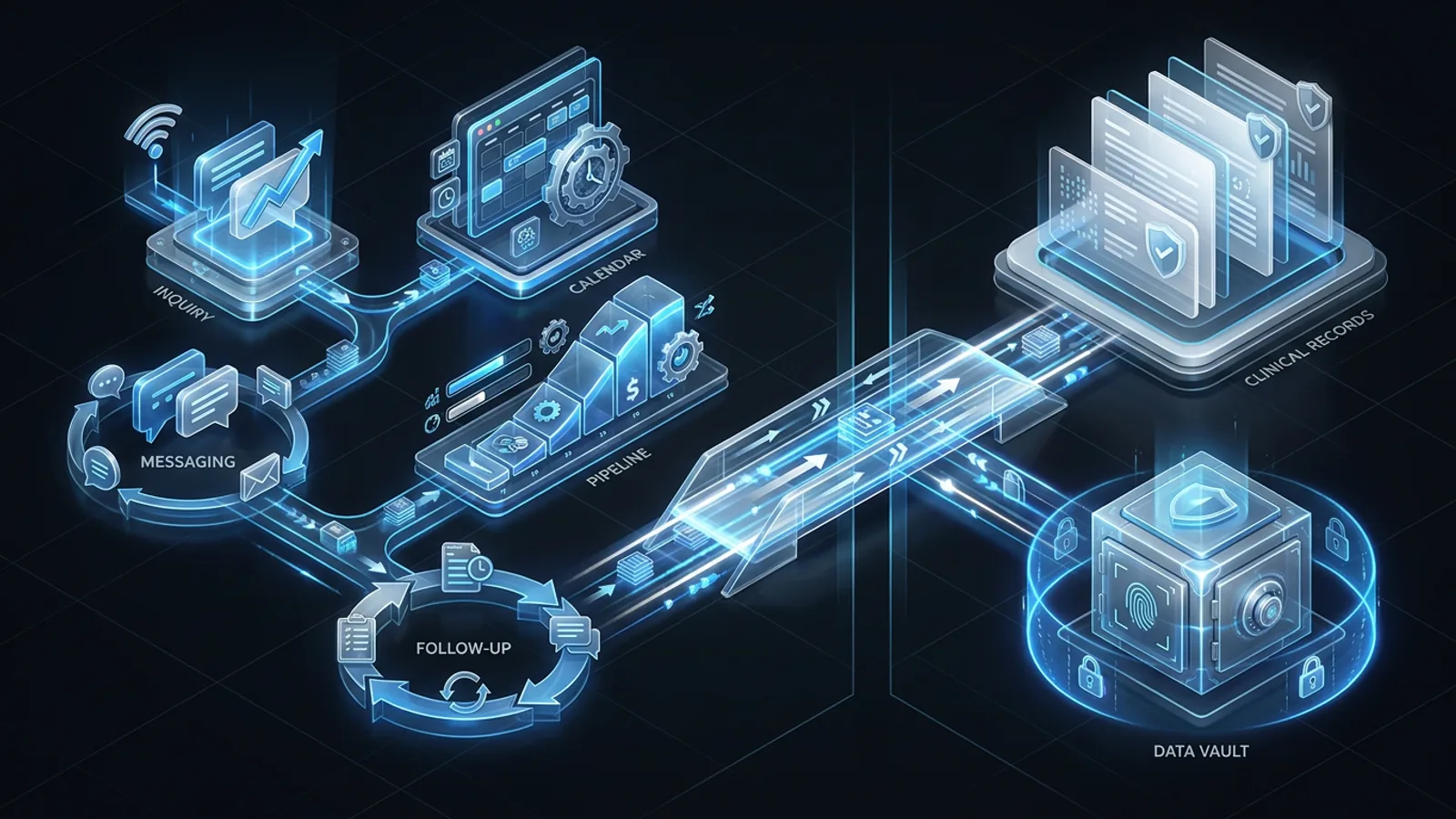
The growth system and the clinical system have different jobs. The EHR should remain the source for clinical documentation and care delivery. The CRM should make the operational journey visible around care: inquiry status, scheduling, reminders, follow-up tasks, onboarding progress, and appropriate review or referral requests.
The most important design decision is the handoff. Decide when a prospect becomes a patient, what minimum information needs to pass between systems, and who confirms that the handoff worked. For a deeper breakdown, read CRM vs EHR for Functional Medicine Practices.
Where patient journeys usually break
Breakdowns tend to happen between stages rather than inside a single tool. Common examples include:
- A form submission creates a notification but no owned task.
- A consultation is booked but preparation instructions arrive too late.
- A no-show is marked on the calendar without starting a recovery path.
- A patient says yes, but intake and payment steps arrive in separate, confusing messages.
- The care team assumes the admin team completed a handoff, while the admin team assumes the opposite.
- A review request is sent on a fixed timer instead of at a meaningful patient milestone.
The goal is not to send more messages. It is to make every message and task serve a defined next step.
A simple patient journey audit
Choose one recent inquiry and trace the complete path. Write down every tool, handoff, delay, duplicate entry, and manual reminder involved. Then answer:
- Could the team see the person’s current stage without checking multiple inboxes?
- Was the next action owned by a specific role?
- Did the patient receive one clear next step at a time?
- Was there a recovery path when the expected action did not happen?
- Did the clinical handoff happen with the right information and at the right time?
That audit gives you a practical build list. Fix the highest-friction handoff first, test it with real scenarios, then continue through the rest of the journey.
Frequently asked questions
What is a functional medicine patient journey?
It is the connected operational path that moves a person from inquiry to consultation, follow-up, onboarding, reviews, and referrals. It defines the next step, owner, message, and system at each stage.
Does a patient journey system replace an EHR?
No. An EHR manages clinical care and records. A patient journey system manages the operational experience around care, including inquiries, scheduling, reminders, handoffs, onboarding, and follow-up.
Where should a clinic start improving its patient journey?
Start by mapping the current journey from first inquiry to onboarding. Identify where ownership is unclear, information is re-entered, follow-up depends on memory, or a patient can reach a dead end.

Aaron has worked with functional medicine practices since 2021, has specialized in GoHighLevel systems since 2020, and is a Biocanic integration partner.