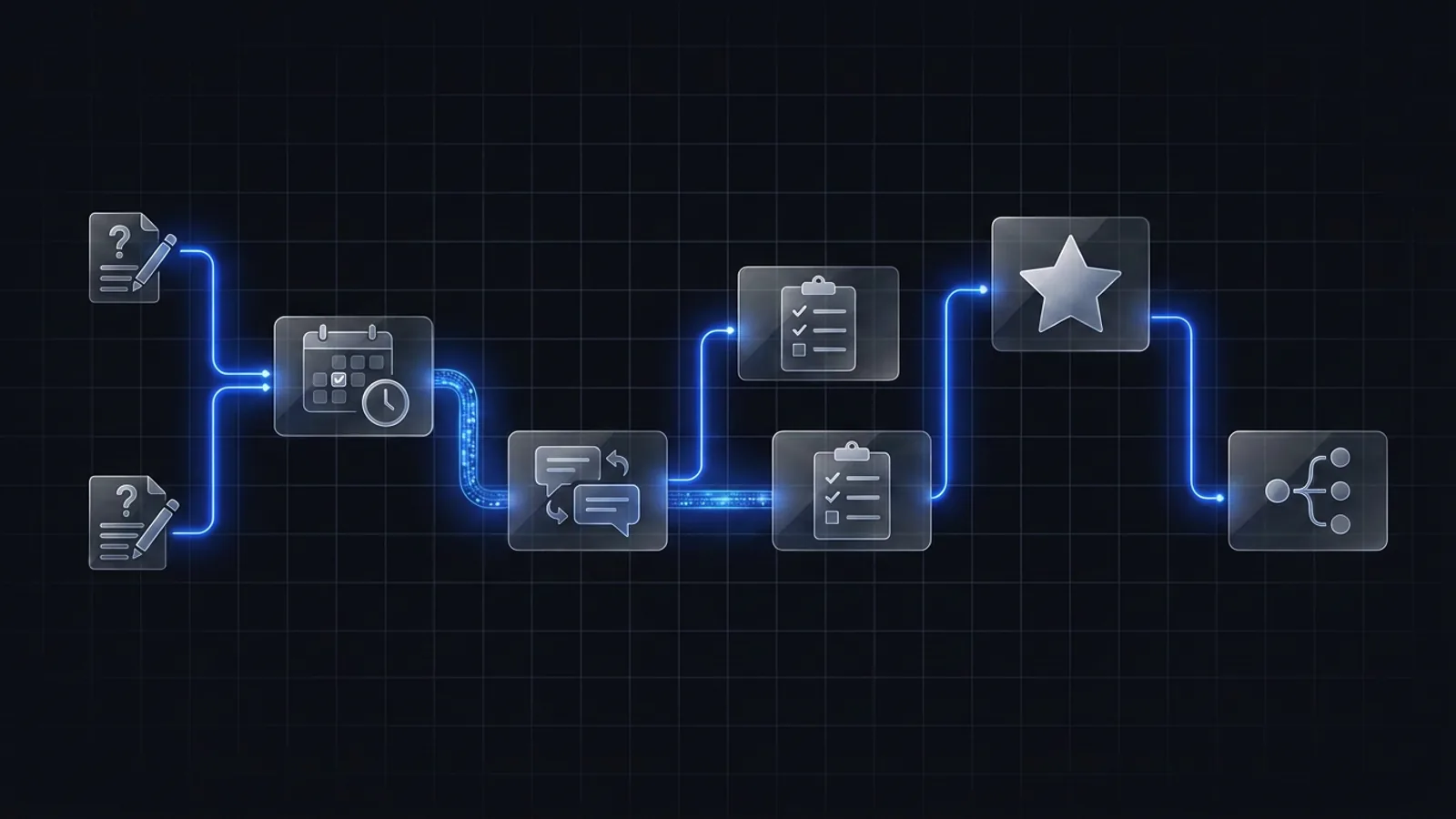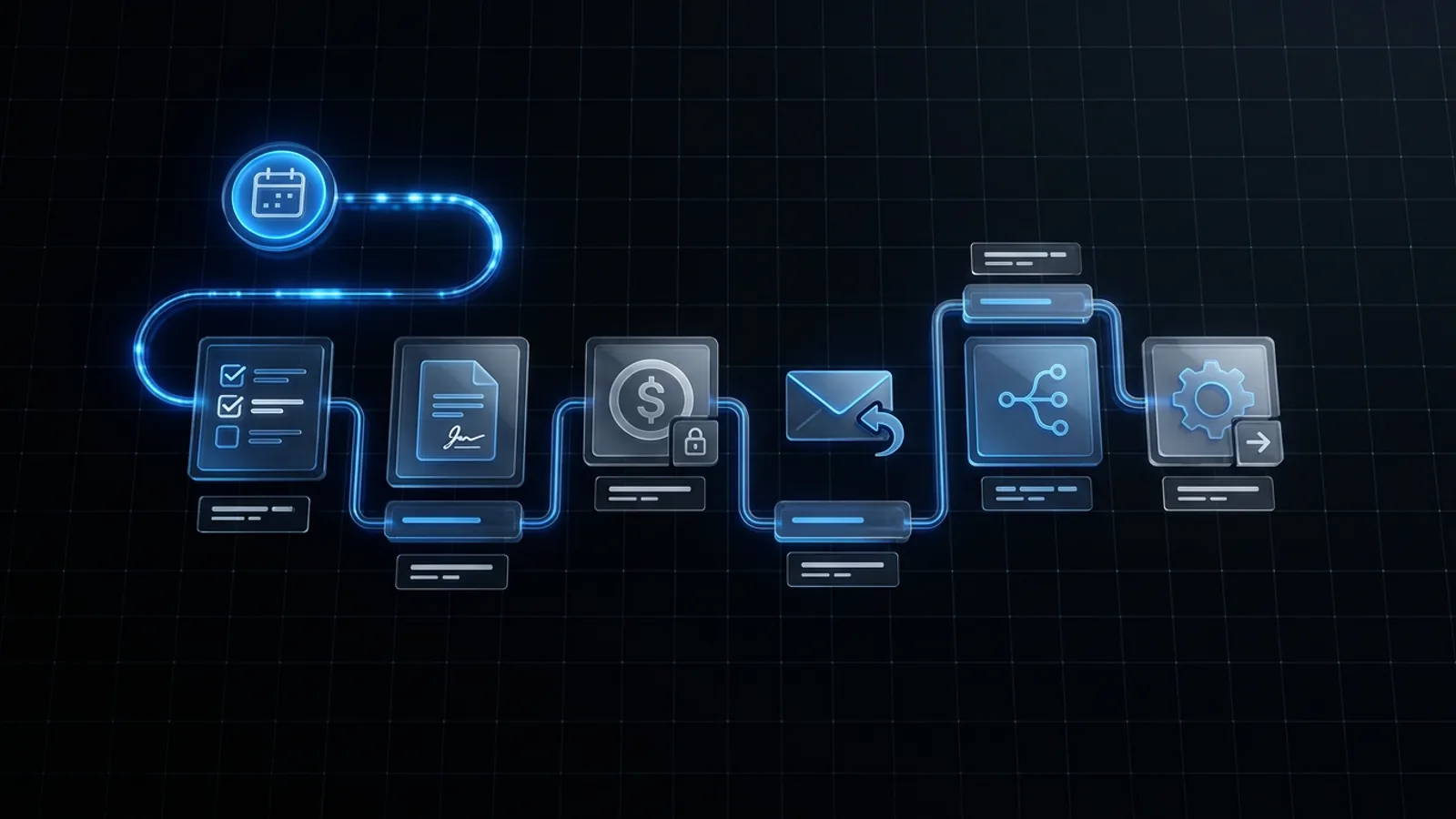
A functional medicine patient onboarding process should move a confirmed patient through administrative intake, agreements and payment steps where applicable, welcome communication, clinical intake in the appropriate system, team handoff, readiness checks, and one clear first next step. Every item needs an owner, status, due time, and exception path.
Onboarding begins when a person has agreed to move forward, but the clinic still needs to coordinate several operational and clinical steps. When those steps arrive through unrelated emails, forms, invoices, and team messages, both the patient and staff have to reconstruct the process.
A better onboarding system makes the sequence visible. It tells the patient what to do next and tells the team what is complete, what is missing, and who owns the exception.
The seven onboarding stages
- Confirm the decisionRecord the correct offer, provider, location or virtual pathway, and agreed next step.
- Start administrative intakeRequest only the contact, preference, and administrative details needed for the process.
- Complete agreements and payment stepsMake requirements, sequence, status, and support options clear where these steps apply.
- Send the welcome orientationExplain what happens next, where to find information, and how to get operational help.
- Complete clinical intake in the right systemKeep health information and clinical documentation in the approved clinical workflow.
- Handoff to the responsible teamAssign ownership and verify that the receiving role has what it needs.
- Confirm readinessClose onboarding only after required steps are complete and the first care-related next step is clear.
What the clinic should be able to see
The onboarding view should answer these questions without requiring an inbox search:
- Which onboarding path is active?
- What has the patient completed?
- What is waiting on the clinic?
- Which role owns the next action?
- Is any deadline or appointment at risk?
- Has the clinical handoff been verified?
- What exact condition marks onboarding complete?
A simple status model is often better than a dense dashboard. Use stages and exceptions that the team can understand during normal work.
What to automate and what to keep human
| Repeatable system action | Human review or decision |
|---|---|
| Send confirmation and next-step instructions | Resolve an unusual offer, schedule, or eligibility question |
| Create tasks and update onboarding status | Review incomplete, conflicting, or sensitive information |
| Remind someone about an outstanding administrative step | Decide how to proceed after repeated non-completion |
| Notify the next role when a milestone is complete | Verify a complex or failed handoff |
| Send approved welcome resources | Provide clinical guidance or care decisions |
Onboarding feels simpler when each message explains the current task, why it matters operationally, where to complete it, and what happens afterward. Avoid sending a wall of unrelated links on day one.
Protect the clinical handoff
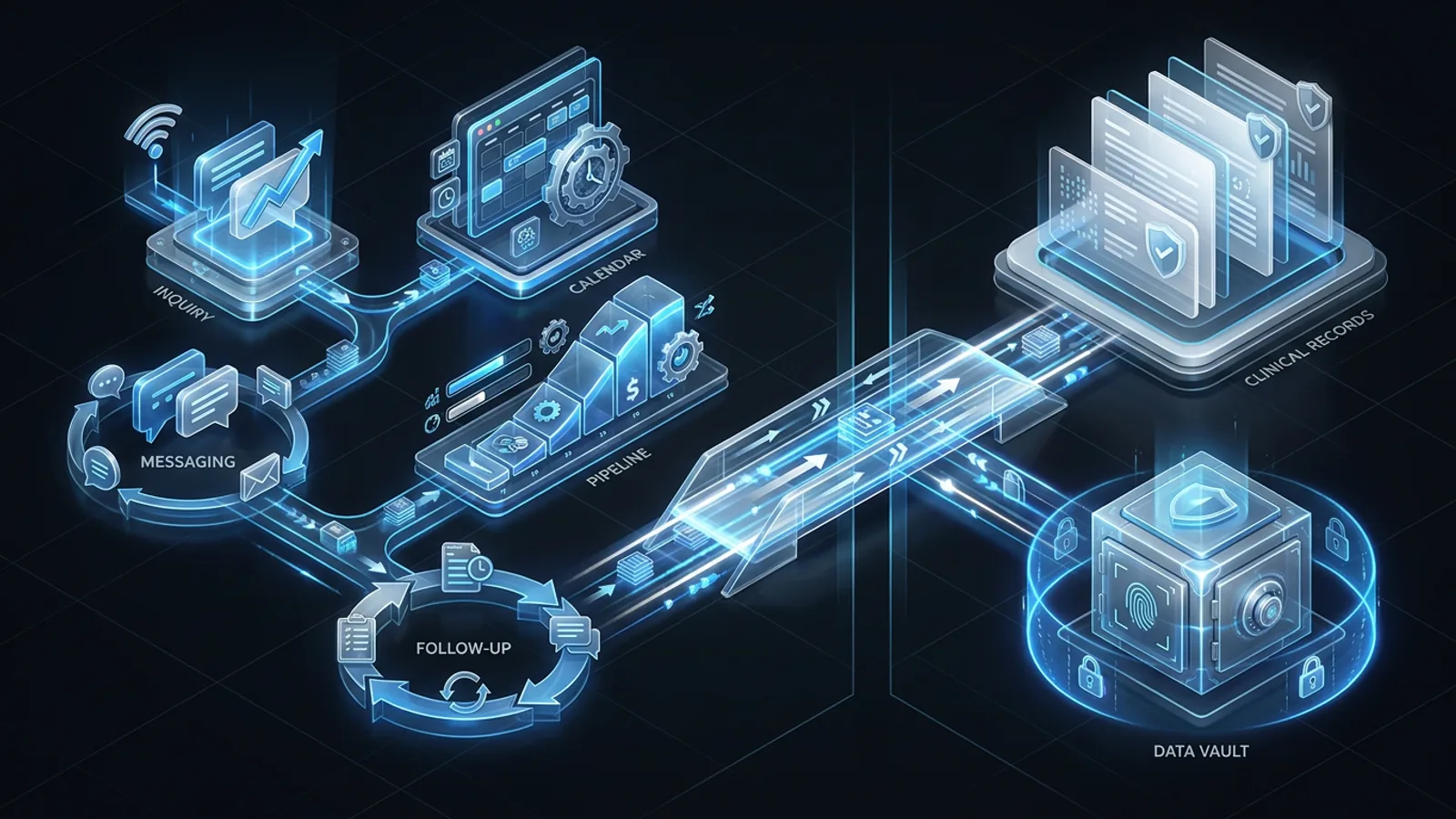
The operational system can track that clinical intake is requested, pending, or complete. The actual health information should remain in the appropriate clinical system and workflow. Define the minimum status information the growth system needs without turning it into a shadow EHR.
For the broader system boundary, see CRM vs EHR for Functional Medicine Practices.
Measure process health, not just completion
Useful onboarding checks include:
- Time from confirmed decision to the first onboarding action.
- Percentage of records with an assigned owner.
- Steps that are most often late or incomplete.
- Number of handoff exceptions requiring manual repair.
- Time from onboarding start to readiness.
These measures show where the process is unclear. They do not guarantee patient or business outcomes, but they help the team improve the system it can control.
A practical onboarding audit
- Choose three recently onboarded patients with different experiences.
- Trace every instruction, form, agreement, payment step, status, and handoff.
- Mark duplicate requests, unclear ownership, and waiting periods.
- Separate operational status from clinical information.
- Define one completion condition for every stage.
- Build and test the exception paths before adding more automation.
Frequently asked questions
What should a functional medicine patient onboarding process include?
It should include a confirmed decision, administrative intake, agreements and payment steps where applicable, welcome communication, clinical intake in the appropriate system, team handoff, readiness checks, and a clear first next step.
What parts of patient onboarding can be automated?
Repeatable confirmations, reminders, task creation, status updates, and welcome instructions can often be automated. Clinical review, unusual circumstances, missing information, and judgment-based decisions should remain visible to the appropriate team member.
How do you know patient onboarding is complete?
Define an explicit completion condition. The required administrative and clinical intake steps are complete, the correct team owns the patient, the first care-related next step is clear, and no unresolved exception remains.

Aaron has worked with functional medicine practices since 2021, has specialized in GoHighLevel systems since 2020, and is a Biocanic integration partner.